Traditional Japanese Craftsmanship

Discover the Soul of Japan Through Its Crafts

For centuries, Japanese artisans have transformed humble materials into objects of profound beauty. We are dedicated to preserving and sharing the living traditions of Japan's most treasured crafts.

Explore the Crafts
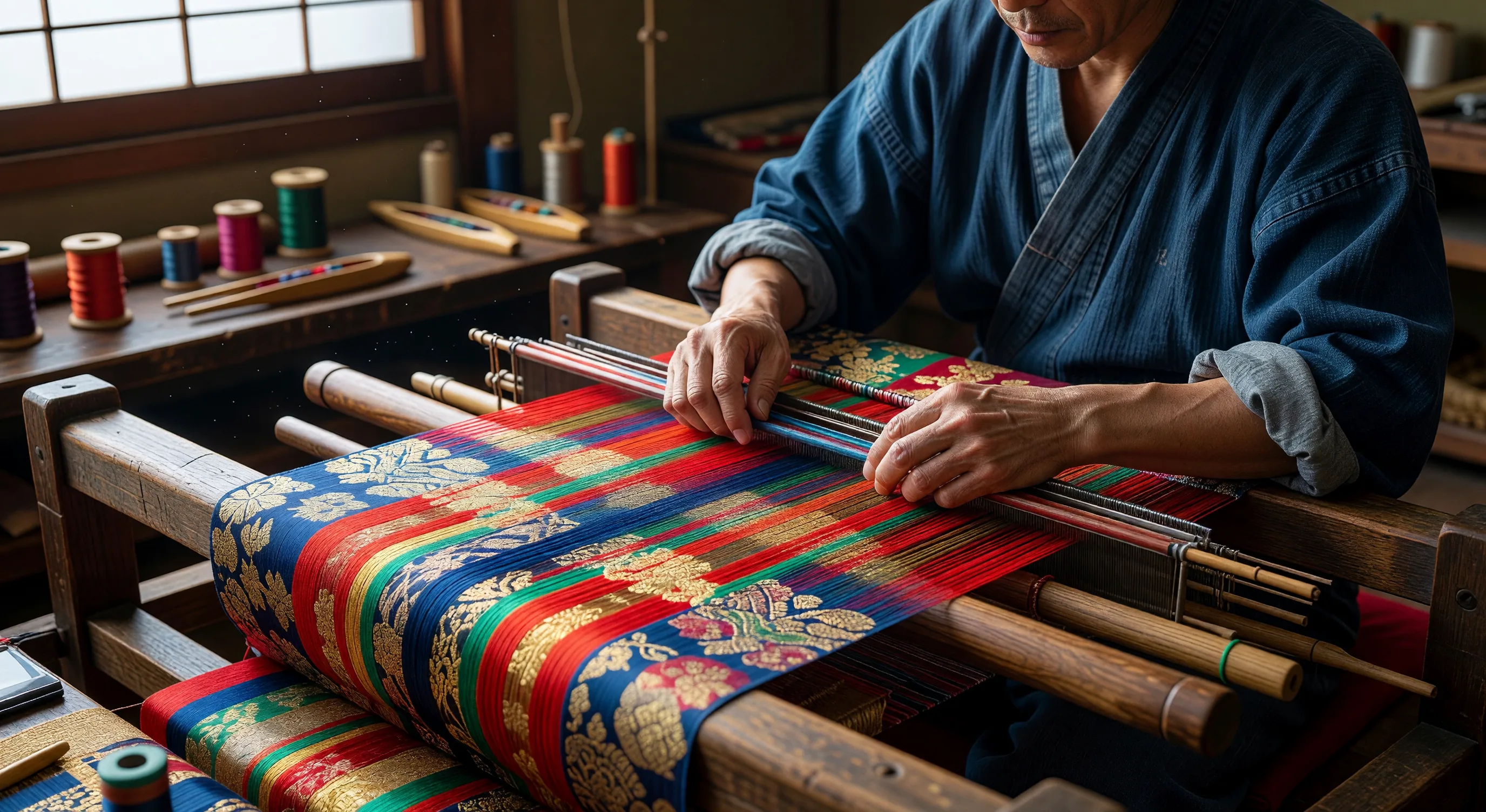
Close-up of Nishijin-ori silk weaving on a traditional jacquard loom in Kyoto, showing luminous gold and crimson threads interlaced in complex floral patterns

The Living Looms of Nishijin

In a quiet district of Kyoto where narrow lanes still carry the rhythmic clatter of jacquard looms, Nishijin-ori silk weaving endures as one of Japan's most technically demanding and visually splendid traditions. Each length of fabric can take weeks to produce, its patterns encoded in thousands of punched cards or, today, digital files that orchestrate hundreds of individual warp threads.

Read the Article

Why Traditional Crafts Matter

In an age of mass production, handmade crafts connect us to something irreplaceable — the human touch, the passage of time, and the wisdom of generations.

Mastery Through Practice

Traditional crafts demand years of dedicated study, honing perception and patience to a fine edge. The craft does not merely produce objects — it forms the artisan who makes them, building a living repository of embodied knowledge that no manual can fully capture.

Harmony with Nature

Japanese craftsmanship has always worked with seasonal materials — bamboo, silk, clay, lacquer sap — rather than against them. Each object carries the memory of the landscape that produced it, making traditional crafts a profound form of ecological dialogue between maker and material.

Cultural Continuity

Every woven pattern, every glaze recipe, every sword-tempering technique is a letter written across time. By supporting traditional crafts, we maintain the threads of cultural memory that connect contemporary Japan to the courts, temples, and farmhouses of centuries past.