βœ“

Voices from the Workshop

Masters of Their Craft

In conversation with the men and women keeping Japan's most extraordinary handcraft traditions alive β€” in their own words.

In Their Own Words

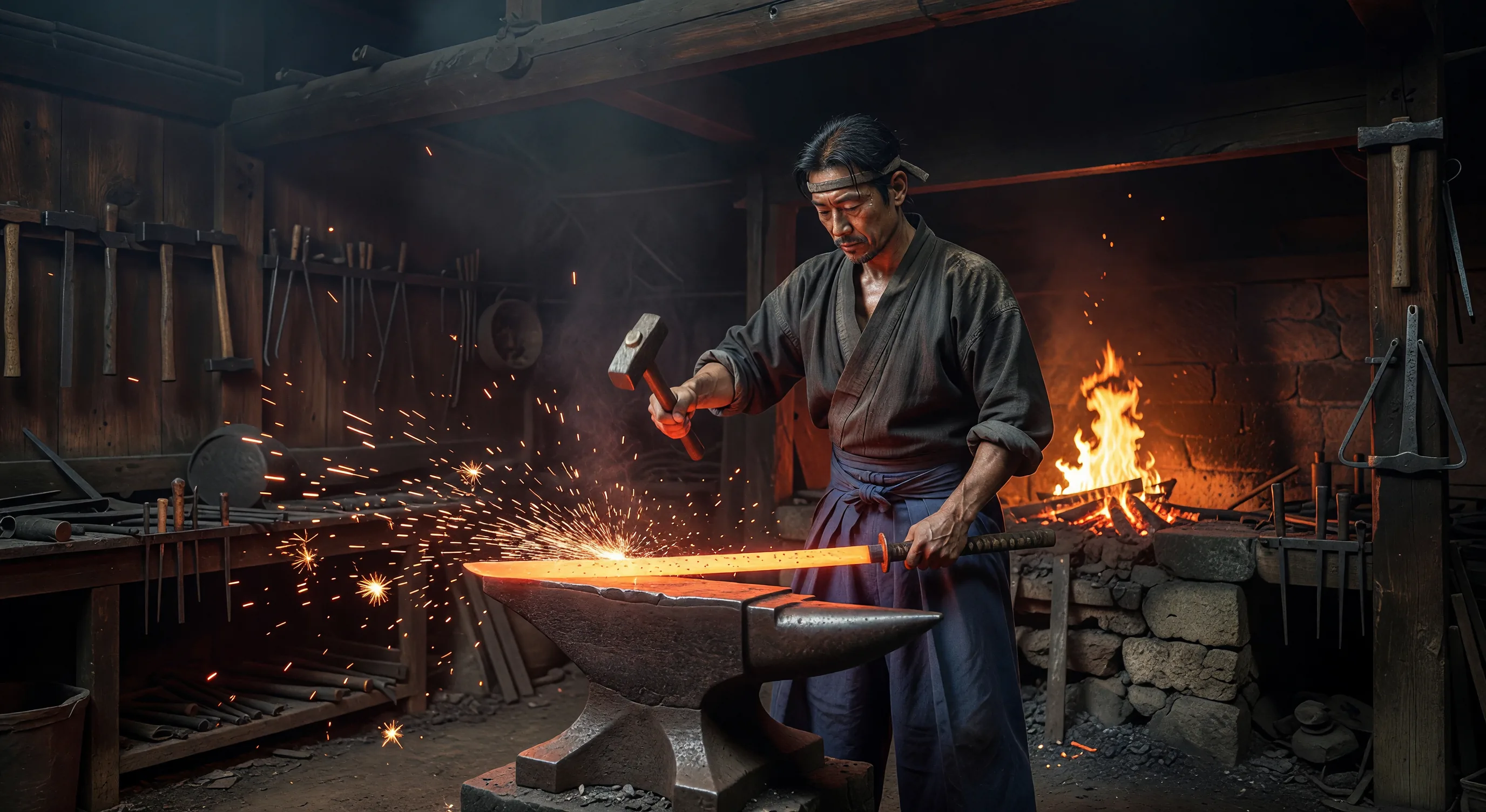
Master swordsmith Hiroshi Tanaka shaping a glowing katana blade at the forge, sparks falling around his steady hammer strokes in a traditional Seki workshop
Metalwork Β· Swordsmithing

Interview: Master Swordsmith Hiroshi Tanaka

You have been folding steel for more than four decades. What still surprises you about the process?

The fire surprises me every time. People imagine that after forty years I can read the colour of the steel perfectly β€” 800 degrees, 1000 degrees, 1250 β€” yes, I can do that. But the fire is alive. Each batch of tamahagane steel has its own character. Some mornings the steel speaks to me quickly, other mornings it takes half the day before I feel that we understand each other. The moment of tameshigiri β€” the test cut β€” still makes my hands tremble slightly. Forty years, and that has never changed.

The tamahagane smelting process is incredibly demanding. Why not use modern high-carbon steel?

A katana made with modern steel is a tool. A katana made with tamahagane is a conversation between the swordsmith and eight hundred years of accumulated knowledge. The traditional tatara smelting process produces a steel with micro-variations in carbon content that, when forged and folded, create the hada β€” the wood-grain pattern visible in the blade. No two blades are alike. That uniqueness is not a defect of the process; it is the whole point of the process. When I look at a blade I made twenty years ago, I can see who I was then. Modern steel would not give me that.

Are young people apprenticing with you? How do you think about the future of the craft?

I have two apprentices currently β€” one from Aichi, one from Kanagawa. Both young, both serious. The examination to become a licensed swordsmith is extremely difficult; the government strictly limits the number of blades a swordsmith can produce each year. This keeps the craft alive by maintaining its value, but it also means there is no quick path. My apprentices know they will spend at minimum five years before they can hold a hammer with complete confidence. The craft self-selects for patience. I think that is correct. Impatience has no place at the forge.

What would you say to someone holding a katana for the first time?

I would say: be still. Most people want to move immediately β€” to swing it, to test the weight. But the first thing a blade teaches you is stillness. Hold it with both hands, eyes closed, and simply feel its balance. A well-made katana will feel like an extension of your spine. If it feels like a foreign object, either the blade is wrong or you are not yet ready to hold it. Prepare yourself first. The blade will wait.
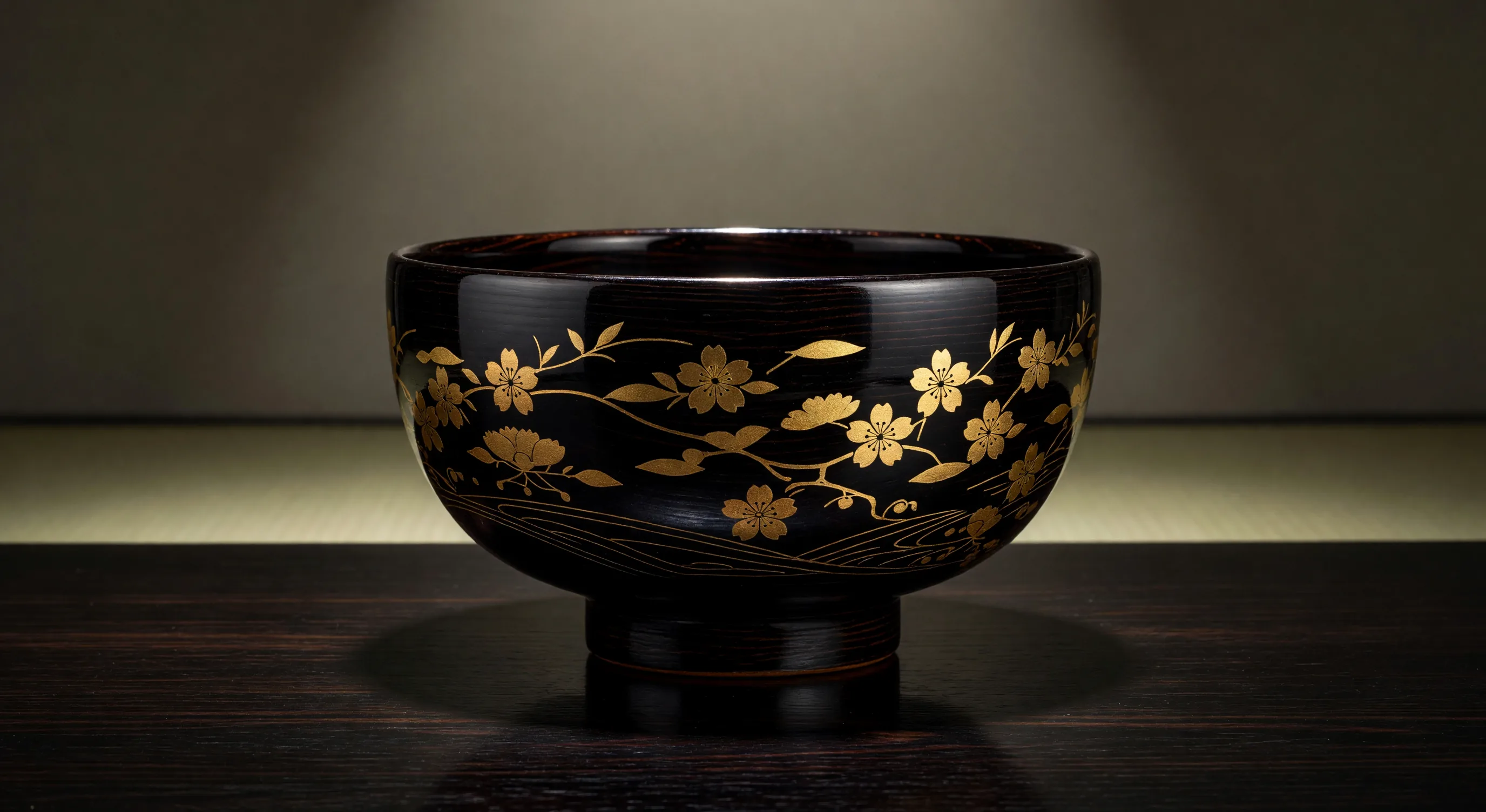
Lacquer artist Yuki Nakamura applying fine gold powder through a delicate bamboo tube to a wet urushi lacquer surface, creating a maki-e crane motif on a lacquered box in her Kyoto studio
Lacquerware Β· Maki-e

Interview: Lacquer Artist Yuki Nakamura

Maki-e involves applying gold and silver powders to wet lacquer with extraordinary precision. How long does it take to complete a single piece?

A simple piece β€” a small box with a single motif β€” might take three months from first lacquer application to final polish. A complex piece depicting a landscape with multiple layers of gold, silver, and coloured powders, with togidashi maki-e burnishing to bring the design flush with the surface, can take two years. I am working on a writing box now that I began fourteen months ago. Each layer of urushi must cure fully in a humidity-controlled chamber before the next can be applied. You cannot rush lacquer. The tree decides the pace, not the artist.

Urushi lacquer is harvested from the Toxicodendron vernicifluum tree and is a powerful skin allergen. Has the material ever harmed you?

Of course. Every urushi artist has a story about their first severe reaction β€” the swelling, the itching. When I began my apprenticeship, I was covered in a rash for three weeks. My sensei said this was normal and necessary β€” that the urushi was getting to know me. I thought she was being poetic, but there is truth in it. Repeated exposure builds tolerance. My skin is now largely immune, though I still experience reactions if I am tired or if I handle raw sap carelessly. The material demands respect. It is not passive; it has its own chemistry, its own intentions.

Your work has been collected by museums internationally. How do you feel about traditional maki-e entering the context of Western fine art?

I have complicated feelings. On one hand, it brings attention and resources to a craft that is genuinely endangered β€” there are perhaps two hundred working maki-e artists in Japan today who practise at a serious level. On the other hand, maki-e was never meant to be displayed behind glass. It was made to be used β€” to be opened, handled, to have things placed inside it. A writing box that sits in a vitrine is a writing box that has been interrupted mid-sentence. I try to make pieces that people will actually live with. When a collector tells me they drink tea from one of my bowls every morning, that moves me more than any museum acquisition.

Meet Our Artisans

A selection of the master craftspeople whose work and stories we document and celebrate across Japan.

KY

Kenji Yamamoto

Ceramics

Kyoto

A seventh-generation potter working in the Kyo-yaki tradition, Yamamoto-san trained under his father and grandfather before completing a residency at the Kyoto Municipal Museum of Industrial Technology. His work ranges from ceremonial tea ware to large sculptural vessels that explore the tension between controlled form and the unpredictable behaviour of ash glazes fired in a wood kiln.

MS

Michiko Sato

Textiles

Nishijin, Kyoto

One of the younger generation of Nishijin-ori weavers, Sato-san has spent fifteen years mastering the intricate jacquard loom systems that produce the district's famous silk textiles. She has revived several historic obi patterns from the late Edo period, working from archived punch-card programmes that she painstakingly translated into modern digital files without compromising the character of the originals.

TG

Takeshi Goto

Woodworking

Nikko, Tochigi

Trained in the carving traditions of Nikko Toshogu, the elaborately ornamented 17th-century shrine complex, Goto-san works primarily with Japanese cypress and hinoki wood. He is one of a small group of craftsmen licensed to undertake restoration work on the shrine buildings themselves, and his independent work β€” decorative ranma transoms, architectural fittings, and sculptural reliefs β€” reflects a deep study of classical motifs combined with a quietly modern eye for proportion.

HI

Haruko Ito

Paper

Echizen, Fukui

Based in the historic papermaking town of Echizen, Ito-san produces washi that is sought by paper conservators and calligraphers internationally for its archival stability and tactile refinement. She has collaborated with institutions including the Tokyo National Museum on paper sourcing for restoration projects, and runs twice-yearly workshops in which participants can experience the full process from raw kozo fibre to finished sheet.

Nominate an Artisan

Do you know a master craftsperson whose work deserves wider recognition? We welcome nominations for artisan profiles and interviews from readers, institutions, and community members across Japan and beyond.