Our Story
About Morning Coffee Bar
Founded in Kyoto, guided by a love of the handmade, and committed to the artisans who keep Japan's greatest traditions alive.
Our Purpose
Why We Exist
Morning Coffee Bar was founded in 2018 with a single animating conviction: that Japan's traditional crafts are among the most significant cultural achievements in human history, and that they deserve careful, sustained, respectful attention from a global audience.
We are not a shop. We do not sell objects. What we offer is documentation, translation, and connection — between the workshops of Kyoto, Tohoku, Kyushu, and Hokkaido and the readers, travellers, and collectors around the world who recognise in handmade Japanese objects something that no factory product can offer: evidence of a human being, working with great skill and deep knowledge, to transform materials into meaning.
Our team is small, our work is slow, and we publish only what we genuinely believe to be accurate, important, and worth your time. We travel to workshops rather than relying on press releases. We interview artisans at length in their own studios. We photograph the processes — the forge, the dye vat, the lacquer chamber — not just the finished products. We believe the making is as important as the made.
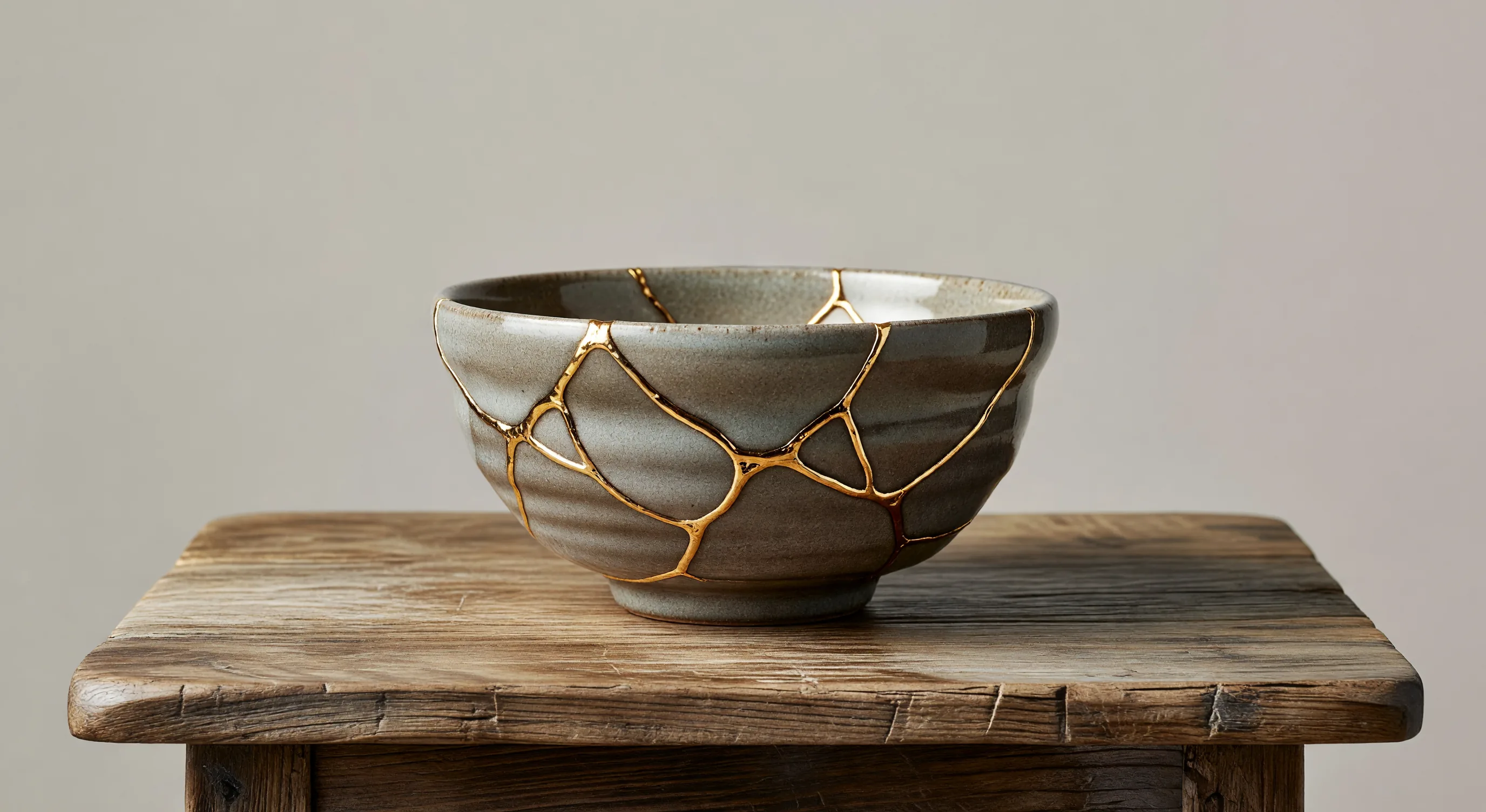
Our Philosophy — Like Kintsugi
Kintsugi — the Japanese art of repairing broken pottery with gold — teaches us that the history of breakage and repair is not something to hide but something to celebrate. The healed crack becomes the most beautiful and distinctive feature of the bowl. An object that has survived fracture and been carefully restored is more interesting, more itself, than an object that has never been tested.
This is also our philosophy toward cultural traditions. We do not approach traditional crafts as precious museum artefacts sealed behind glass, but as living practices that have bent and broken under the pressures of industrialisation, depopulation, and changing markets — and that can be repaired, revitalised, and made relevant to a new generation without losing their essential character.
We document not only the triumphs of these traditions but their vulnerabilities: the workshops that struggle to find apprentices, the materials that are becoming scarce, the regional economies that can no longer support full-time artisans. We believe that honest journalism in service of a craft is the most respectful thing we can offer.
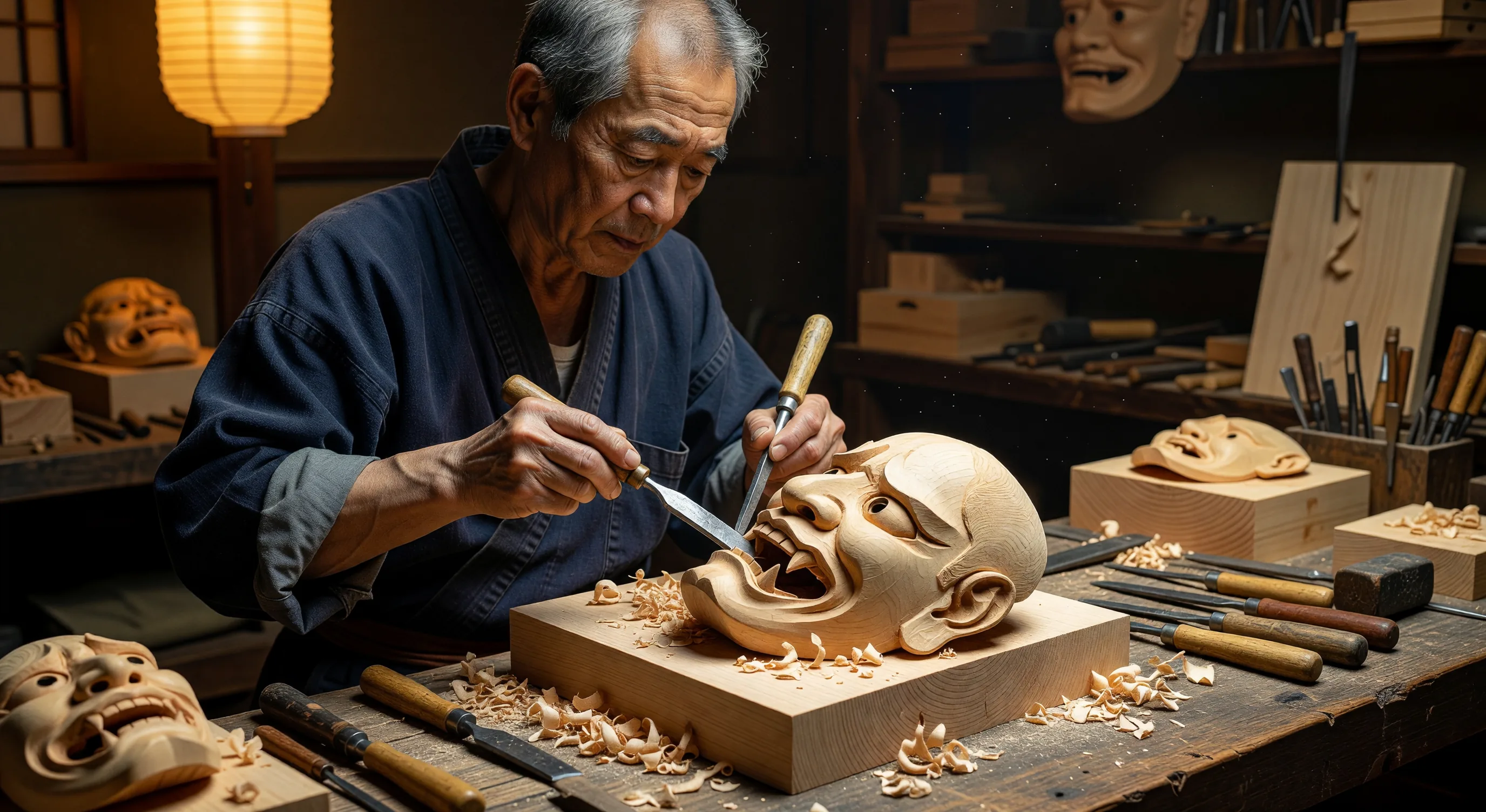
Preserving Living Heritage
A Noh mask is not simply a carved piece of wood. It is the physical embodiment of hundreds of years of theatrical tradition, of religious practice, of the accumulated aesthetic judgements of generations of carvers who each added something to the slowly evolving canon of mask types. The carver who makes a Noh mask today is in dialogue with Zeami Motokiyo, the 15th-century master who wrote the plays the masks were made to inhabit.
Japan's government recognises certain artisans as Living National Treasures — Ningen Kokuho — a designation that acknowledges the knowledge held in a single practitioner's hands and mind as a national resource to be supported and transmitted. We work alongside this system, profiling both recognised masters and the less celebrated craftspeople whose work is equally important but perhaps less visible.
Preserving living heritage is not the same as preserving a building or a document. It requires an unbroken chain of human transmission: a teacher, a student, a period of apprenticeship, and the gradual internalization of knowledge that cannot be fully written down. Every artisan we document is both a repository of the past and a bridge to the future. Our work is to honour that double role.
The Team
The People Behind Morning Coffee Bar
A small, dedicated team committed to rigorous, respectful coverage of Japan's living craft heritage.
Sarah Chen
Editor-in-Chief
Born in Vancouver and based in Kyoto since 2014, Sarah founded Morning Coffee Bar after a decade as a cultural journalist covering East Asian arts for international publications. Her passion for Japanese craft began with a chance afternoon in a Nishijin weaving workshop and has never left her. She oversees all editorial, leads the major artisan interview series, and is responsible for the quality and integrity of everything we publish.
Kenji Watanabe
Cultural Advisor
A former curator at the Kyoto National Museum's craft and textile department, Kenji brings twenty-five years of institutional knowledge to Morning Coffee Bar. He advises on accuracy, context, and terminology, and maintains the relationships with artisan associations and craft preservation bodies that allow us access to workshops and artisans who might otherwise be difficult to reach. His particular expertise is in the history of Kyoto textile traditions.
Aiko Mori
Field Researcher
Aiko travels extensively across Japan on behalf of Morning Coffee Bar, conducting on-the-ground research in workshops, studios, and craft communities from Hokkaido to Kyushu. She has a background in cultural anthropology from Kyoto University and brings both academic rigour and genuine warmth to her relationships with the artisans she spends time with. She is the primary author of our regional destination guides and workshop profiles.
Get in Touch
Contact Us
Our Details
Morning Coffee Bar
5-3 Higashiyama Ward
Kyoto, Japan
We aim to respond to all enquiries within two business days. For urgent workshop bookings, please mention this in your subject line.
For press enquiries, partnership proposals, or artisan nominations, please contact contact@morningcoffeebar.com with a brief description of your enquiry.